
English| EUR
Suggested for you
More currencies
Choose a language
The valley itself costs nothing to enter, while every estate inside it sets its own tasting fee — a single distinction that shapes an entire day out. This Franschhoek Wine Tasting Cape Town guide sets out the visitor centre's trading pattern, the recommended arrival window and what the valley's layout means for a day trip. Read it before fixing a departure time.
Quick answer
Entry to Franschhoek Wine Valley is free at 0 ZAR; individual wine estates charge their own tasting fees. The visitor information centre at 66B Huguenot Road, R45, trades 08:00–17:00 Monday to Friday, with shorter Saturday and Sunday hours. Arrive between 09:00 and 12:00 to avoid peak afternoon heat and crowding at the popular estates, and phone ahead on +27 21 250 1607.
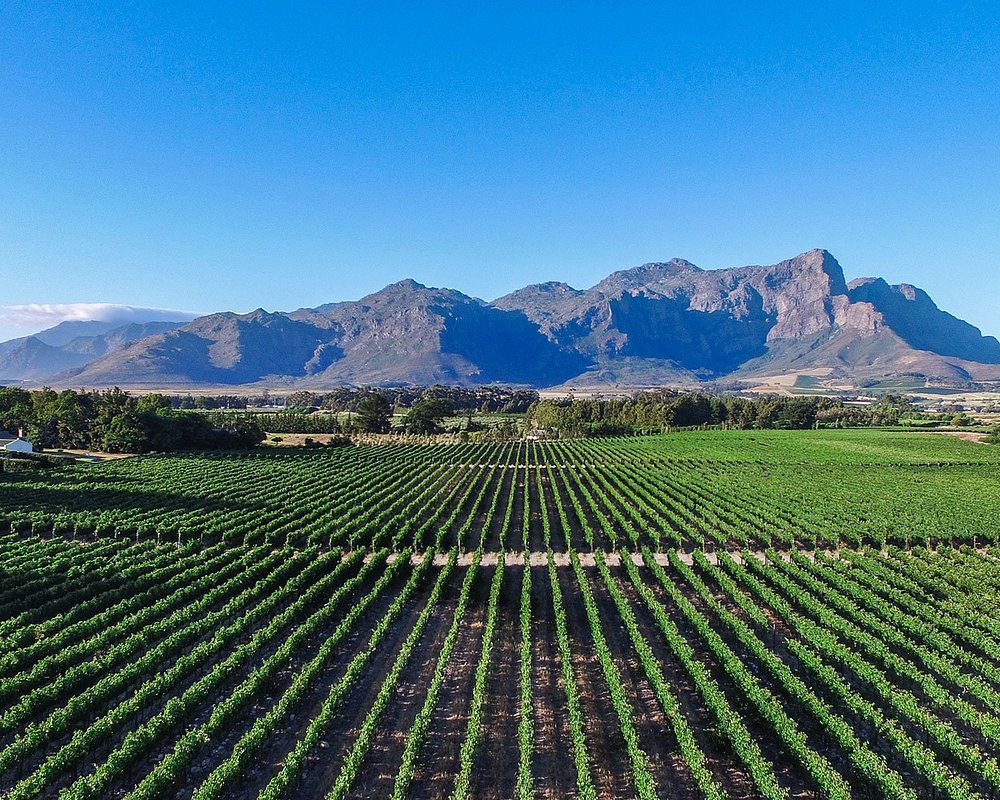
Before the vines, this valley was called Olifantshoek — Elephants' Corner — after the herds that crossed it each season. French Huguenot refugees were granted farmland here from 1688, and their surnames still sit on the estate gates: La Motte, Cabrière, Dieu Donné. That inheritance explains why franschhoek wine tasting cape town appears in so many South African trip plans. The subject is not one attraction but a working agricultural valley, dozens of estates deep, closed in by mountains on three sides. Geography explains most of the practical questions. The R45 runs the length of the valley and becomes Huguenot Road through the village, where the visitor information centre stands at number 66B; east of town the same road climbs the Franschhoek Pass. Estates are strung along that spine and up the side roads, which means a Cape Winelands day trip is a driving exercise as much as a drinking one. The Franschhoek Wine Tram was built around that problem, looping visitors between cellar doors without anyone drawing the designated-driver short straw. Tasting fees are set estate by estate rather than centrally, and many are credited against a bottle purchase, which is why no single valley-wide figure exists. Cellar tours, lunch sittings and harvest events are reserved separately from tastings, and the better-known names fill first. What visitors do with that information tends to follow a pattern. Three or four cellar doors is the honest ceiling for a single day; push past that and the tasting notes blur together. The valley's speciality is range: Méthode Cap Classique from the cooler slopes, old-vine Semillon, and Cabernet Sauvignon and Bordeaux-style blends off the warmer floor below the Drakenstein foothills. Harvest runs roughly February to April, when cellars are loud and tasting rooms fullest. August falls in the Cape winter, which means fireplaces, wet mountain light, quieter rooms and a shorter Sunday. A wynproe here rewards forward planning in either season. The practical takeaway is unglamorous. Confirm estate reservations before leaving the city, fix an arrival time rather than drifting out mid-afternoon, and treat the visitor information centre on Huguenot Road as the fallback for anything the estates cannot answer by phone. Planned that way, a franschhoek wine tasting cape town day trip becomes logistics rather than luck, and the valley's booking pages handle the rest.
“Three or four cellar doors is the honest ceiling for a single day; push past that and the tasting notes blur together.”
The best arrival window for your visit is 09:00–12:00 to avoid peak afternoon heat and crowds at popular wine estates. Planning your trip around this timeframe ensures a smoother experience at the various tasting rooms.
Warm and dry with temps 25-30°C. Popular events occur, increasing local visitor numbers.
Mild weather with temps 18-24°C. The vine leaves turn vibrant colors during this period.
Cool and rainy with temps 10-17°C. Many estates offer cozy indoor seating by fireplaces.
Pleasant temperatures of 18-23°C. The valley landscape is lush and green following the winter rains.
Verdict: For the most relaxed experience, target Tuesday to Thursday, arrive between 09:00 and 12:00, during the months of April or October.
The Franschhoek Wine Valley visitor center operates throughout the week to assist with your wine tasting itinerary planning. Please refer to the daily schedule below when coordinating your visit from Cape Town.
Access to the Franschhoek Wine Valley is free of charge, as the region is a public destination. Individual wine estates set their own unique tasting fees and pricing structures.
Verdict: A typical adult pays 0 ZAR for valley access, while total costs depend on the number and selection of individual wine estates visited.
Franschhoek is located approximately 75 kilometers east of Cape Town. The most direct approach is by car via the N1 and R45 highways.
N1 north towards Paarl, then R45 to Franschhoek
Direct route from Cape Town city center
Direct route via N1 and R45
To avoid peak afternoon heat and crowds at popular wine estates, aim for the best arrival window of 09:00–12:00.
This plan suits first-time visitors arriving from Cape Town without a designated driver, using the Franschhoek Wine Tram or a hired transfer between estates. Allow roughly seven hours door to door, including the drive each way.
Reach the valley and park or disembark near the tourism office at 66B Huguenot Road, R45, the R45 running straight through the village as its main street. Allow around 90 minutes for the drive from central Cape Town.
Board your booked hop-on hop-off tram or meet your driver on Huguenot Road. Queues build once the first estates open, so allow 15 minutes at the boarding point.
Start at a valley-floor estate such as Rickety Bridge, Grande Provence or Boschendal, where tasting rooms sit close to the drop-off point. Budget 45 to 60 minutes per tasting.
Move up the valley toward estates like La Bri or Mont Rochelle. Tram or shuttle legs between stops run 10 to 20 minutes, so build transfer time into your count.
Break for a seated lunch at an estate restaurant rather than tasting through the middle of the day. Book the table in advance, particularly in summer.
Fit in one or two more tasting rooms, keeping the last stop nearest your return point. Confirm the final tram or transfer departure before you settle in.
Walk the main street for the Huguenot Memorial and gallery windows, an easy 30 to 40 minutes on foot. Ring +27 21 250 1607 if you need to confirm anything locally.
Leave the valley for the return drive over Helshoogte Pass or via the N1. Expect traffic to slow the last stretch into the city on weekday evenings.
Navigating the Franschhoek Wine Valley efficiently requires planning to ensure a smooth experience between estates.
Many boutique estates operate by appointment only, especially on weekends, so secure your slots at least a week prior to arrival. Direct emails or estate websites are the most reliable way to confirm availability.
Larger estates often host major tour groups, whereas smaller producers frequently offer more intimate, educational tastings with winemakers or senior staff. Research smaller estates to avoid the typical crowds.
The Franschhoek Wine Tram is a popular transit method, but it follows a fixed schedule that limits time at each stop. If you prefer a relaxed pace, consider hiring a private driver for the day to gain more flexibility with your itinerary.
Even on hot days, wine cellars and barrel rooms remain significantly cooler than the outside air. Bring a light layer to stay comfortable during underground tours or barrel tastings.
Most estates provide convenient shipping services for international or domestic delivery, allowing you to avoid carrying heavy bottles throughout your trip. Inquire about shipping costs and logistics at the tasting room counter before finalizing your selections.
Road safety and alcohol consumption limits are strictly enforced in the Western Cape. Always use professional shuttle services or designated drivers to travel safely between the rural estates.
Everything you need to know about franschhoek wine tasting cape town
Public transport options to the valley are limited, so most visitors prefer booking a private transfer or a guided shuttle service. Driving yourself or using a pre-booked car service offers the most flexibility for visiting multiple estates in a single day. Reliable transport is essential for a safe and enjoyable journey from the city.
Paarl, Franschhoek and Stellenbosch Wine Tour
Read more Tickets & toursHop-on Hop-off Wine Tram Tour
Read more GuideTaxi and Driving Costs to Franschhoek
Read more GuideDrive Time to Franschhoek
Read more GuideDistance from Cape Town to Franschhoek
Read more Tickets & toursWine Tram Tour from Cape Town
Read more Tickets & toursStellenbosch & Franschhoek Wine Tour
Read more GuideHow to Get to Franschhoek from Cape Town
Read more